


The aim is to develop a new, efficient, sustainable, technologically advanced circular value chain, geared towards recovering critical, strategic raw materials (CRMs) in a targeted manner. These CRMs can be found in post-consumer waste and the streams resulting from processing it, such as photovoltaic and hybrid panels, printed circuit boards (PCBs), end-of-life vehicle (ELV) fluff, steel mill tailings and other complex industrial solid waste materials. SERVET will focus on recovering key, strategic raw materials such as copper (Cu), silicon (Si), tantalum (Ta) and niobium (Nb), materials that are essential for critical sectors such as the energy transition, digitalisation, and the automotive and electronics industries.

Subsidised by the CDTI and supported by the Ministry of Science, Innovation and Universities

The objective is to develop artificial intelligence-based technologies to identify, sort and recover valuable metals in the recycling process of the new generation of end-of-life vehicles (ELVs).
Subsidised by the Basque Government.


Design, development and evaluation of a prototype for automatically identifying and sorting plastic waste, with brominated flame retardants based on laser-induced breakdown spectroscopy (LIBS) applied to plastics from WEEE, CDW and aviation, developing recycled plastic formulations and demonstrating their validity in high value applications.

 |
This project received funding from the European Commission's Horizon 2020 research and development programme under contract number 820477 |
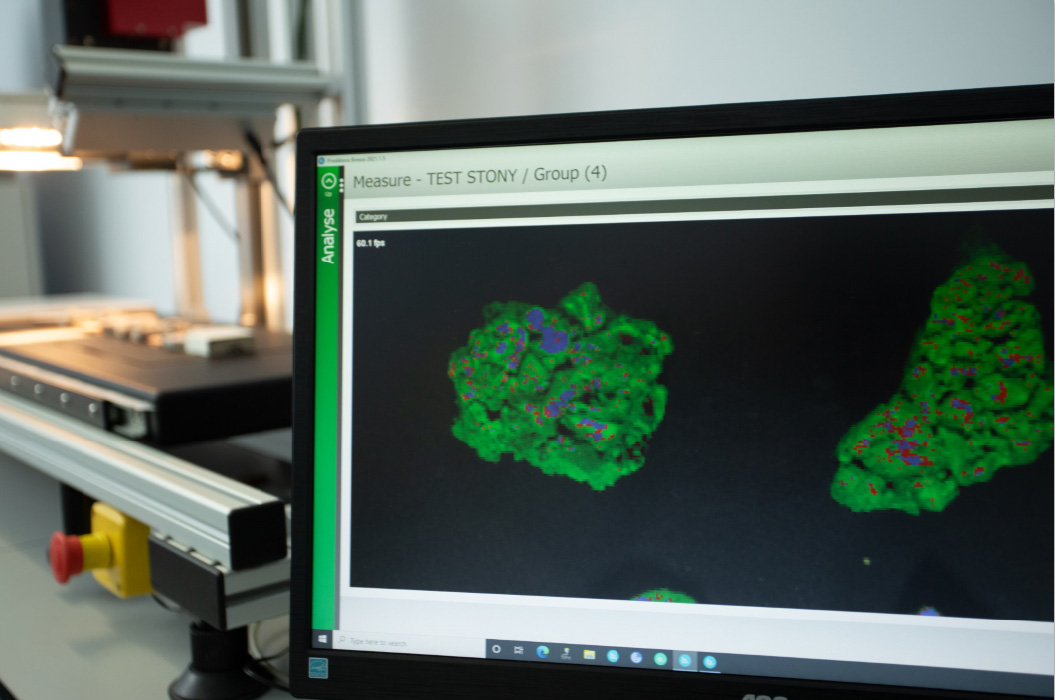
Design, development and evaluation of a prototype for automatically identifying and sorting plastic waste, with brominated flame retardants based on laser-induced breakdown spectroscopy (LIBS) applied to plastics from WEEE, CDW and aviation, developing recycled plastic formulations and demonstrating their validity in high value applications.

 |
This project received funding from the European Commission's Horizon 2020 research and development programme under contract number 869336. |

We research and develop new lab-based real-time identification and quality control systems through the incorporation of artificial intelligence; decision-making support systems; research on traceability using Blockchain technology. Lab-based development and validation of the interconnection and performance of components in a cyber-physical system.

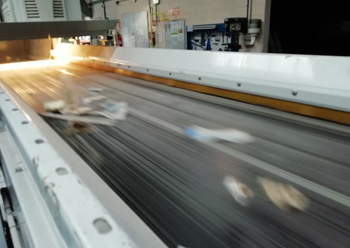
We seek to create new technological knowledge that lays the foundations for the smart digital transformation of waste sorting plants, aimed at increasing the efficiency and productivity of the processes, and driving future R&D projects to tackle the demanding challenges that lie ahead in the coming decades.

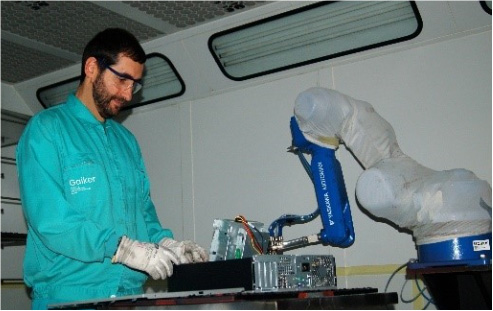
Development of HW (manipulation robots, collaborative robots, AGVs, cameras), SW (individual actions, plant integration, robot and human communication), virtual models of devices and complete plant, application to WEEE management, and technological, environmental (LCA) and social (SLCA) assessment with ethical aspects.

|
This project received funding from the European Commission's Horizon 2020 research and development programme under contract number GA 820742 |
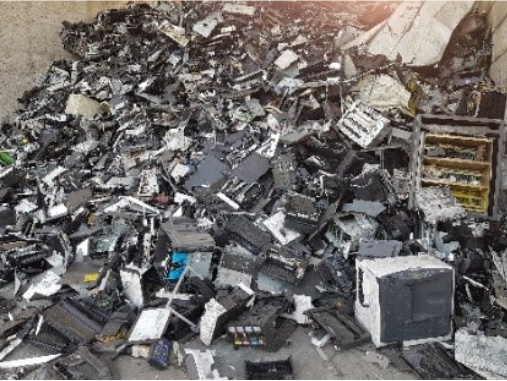
The project is based on designing a pre-treatment process, sorting the plastic waste in the WEEE stream, and separating high impact polystyrene (HIPS) and acrylonitrile–butadienestyrene (ABS) from WEEE for further purification and recovery of additives.

|
This project received funding from the European Commission's Horizon 2020 research and development programme under contract number 821087 |
